

This MRI image compares muscle and fat in three persons:
On the left is a 40 year old triathlete with a large amount of muscle and minimal fat.
In the middle is a 74 year old sedentary person with decreased muscle mass and increased fat.
On the right is a 70 year old triathlete who has retained muscle and bone density similar to the younger athlete.

The takeaway is that consistent exercise can help maintain youthful muscle mass and fitness even in old age. In contrast, inactivity can lead to declines in muscle and increased fat regardless of age.
It's never too late to start an exercise regimen and experience the benefits. Consistent strength training and aerobic activity can keep your muscles and bones strong over time. Maintaining an active lifestyle is key to healthy aging.
This image shows that youthful fitness levels can be retained well into old age through vigorous exercise over the decades.
Smoking reduces lifespan significantly. Lighting up cigarettes results in a loss of 40% of expected years of life compared to non-smokers. But you already knew that, didn’t you?
However, lack of exercise is even more detrimental to longevity. The least physically fit 25% of people have mortality rates 4 times higher than the most fit 2% of people who exercise regularly.
In terms of impact on lifespan, being physically fit is more influential than quitting smoking. Engaging in consistent exercise and activity can significantly increase years of expected life.
Watch this video to know more.
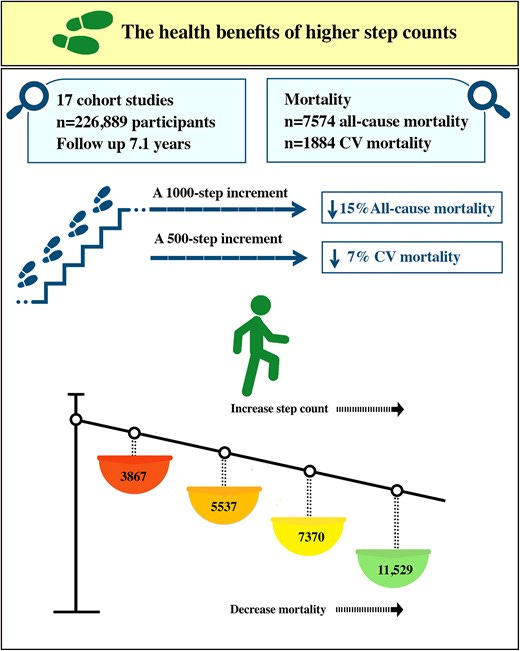
A meta-analysis of 17 studies with over 220,000 participants found that more daily steps linearly associated with 15% lower risk of all-cause mortality with each 1,000 step increment and 7% lessser risk cardiovascular mortality with each 500 step increment.
Walking reduces your risk of death; benefits continue up to 20k steps/day.
Another study of nearly 5,000 people found that taking 8,000 steps per day was associated with a 49% lower risk of premature death compared to just 4,000 steps. 8,000 steps/day leads to significantly lower cardiovascular disease & cancer mortality.
Those taking 12,000 steps daily reduced their mortality risk by 65%. More intense walking cadence did not lower mortality beyond total steps taken.